The world faces a growing waste crisis. Landfills in many countries are reaching capacity, and recycling systems often fall short. Poor waste management releases methane, a greenhouse gas far more potent than carbon dioxide, contributing significantly to climate change. As energy demands rise, finding sustainable ways to manage waste and generate power becomes critical.
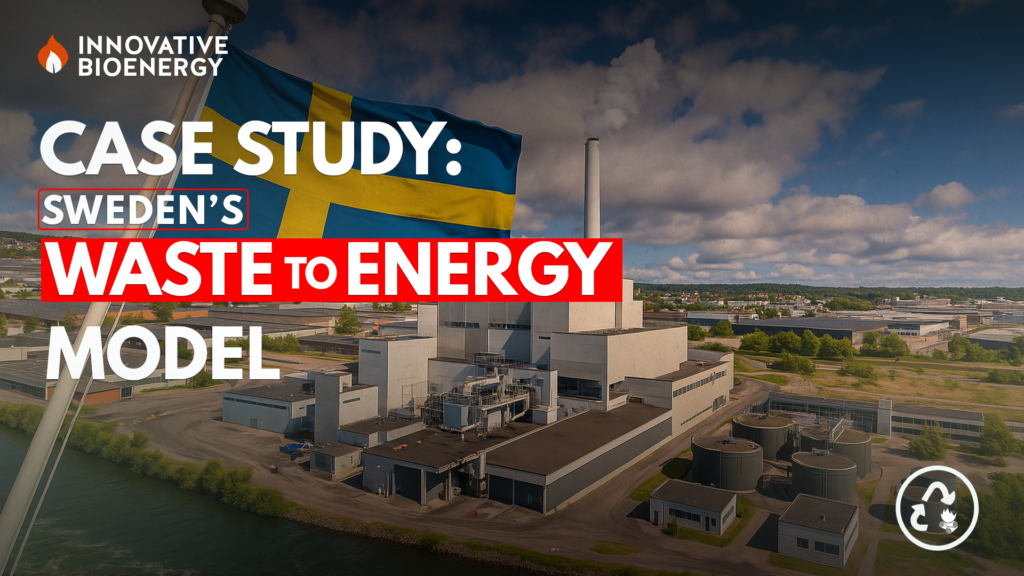
Waste-to-energy (WtE) refers to converting non-recyclable waste into usable energy such as electricity and heat. Sweden has developed one of the most efficient waste-to-energy models, reducing environmental impact while supporting national energy needs.
Sweden’s Waste-to-Energy Model: A National Transformation
1. Minimal Landfill Use Through Strong Policies
As per reports, Sweden sends less than 1% of its household waste to landfills, thanks to strict landfill bans and high landfill taxes. This is supported by a national commitment to recycling, composting, and energy recovery, making landfill reduction a cornerstone of Sweden’s waste management system.
2. Advanced Waste Incineration Plants for Energy Recovery
Over 50% of Sweden’s household waste is processed in modern waste-to-energy incineration plants. These facilities safely convert non-recyclable waste into electricity and heat, which powers district heating networks serving millions of homes and businesses.
3. Combined Heat and Power (CHP) Technology for Maximum Efficiency
Sweden’s WtE plants use combined heat and power (CHP) systems, producing both electricity and heat from the same waste input. This dual output maximizes energy efficiency and reduces reliance on fossil fuels, contributing to Sweden’s climate goals.
4. Supportive Policies and Public Participation
Sweden’s success is driven by progressive policies such as:
- Landfill bans on organic and combustible waste.
- Extended Producer Responsibility (EPR) laws hold manufacturers accountable.
- High public awareness and education campaigns promoting active recycling and sorting.
Why Sweden’s Waste-to-Energy Model Stands Out
Sustainability and Emissions Reduction
By diverting waste from landfills, Sweden significantly reduces methane emissions. The WtE model supports the global shift toward carbon neutrality by generating clean energy from waste.
Energy Security and Independence
Waste-to-energy plants provide reliable, renewable energy, reducing Sweden’s dependence on imported fossil fuels and strengthening national energy security.
Economic Benefits from Waste Imports
To maintain optimal capacity, Sweden imports waste from neighboring countries, generating millions in revenue and fostering international cooperation.
Addressing Environmental Concerns
Some environmental experts caution that WtE incineration, if not paired with strong recycling efforts, may reduce recycling rates. Sweden addresses these concerns by:
- Enforcing strict emissions standards.
- Using advanced filtration and monitoring systems.
- Prioritizing recycling and public education to maintain high sorting rates.
These measures ensure that waste-to-energy complements rather than replaces sustainable waste practices.
Global Comparisons: Sweden’s Leadership in Waste Management
| Country | Landfill Use | WtE Integration | Key Challenges |
| Sweden | <1% | High | None significant |
| Germany | ~0.5% | High | Sorting compliance |
| USA | ~50% | Low | Landfill preference, weak policy |
| India | ~70% | Very Low | Infrastructure, segregation |
Countries with strong policies and public participation, like Sweden, have successfully integrated waste-to-energy systems, offering scalable models for others.
Key Takeaways from Sweden’s Waste-to-Energy Success
- Waste is a valuable resource for energy and environmental benefits.
- Effective waste-to-energy requires strong infrastructure, regulation, and public cooperation.
- Sweden’s model supports climate goals, energy transition, and economic growth.
- Other nations can replicate Sweden’s success by adopting tailored policies and technologies.
Conclusion: A Blueprint for a Greener Future
Sweden’s waste-to-energy model is a practical, sustainable, and scalable solution to the global waste crisis. By combining progressive policies, cutting-edge technology, and strong public engagement, Sweden has turned waste into a clean energy resource. As countries worldwide seek greener energy and better waste management, Sweden’s model offers a proven path toward carbon neutrality, energy security, and environmental sustainability.
Adopting waste-to-energy is not just about managing garbage, it’s about powering a cleaner, greener future.